


National Physical Therapy Month
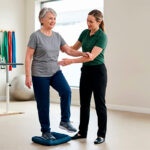
Celebrate Better Balance With Physical Therapy
Discover how physical therapy can help you build steadier movement, greater confidence, and a stronger foundation for everyday life.
Balance & movement
It’s easy to take good balance for granted. When everything’s working as it should, stepping off a curb or whipping around to catch a misbehaving grandkid doesn’t require much thought. But when balance becomes less reliable, everyday activities may suddenly require more attention and confidence.
Fortunately, that’s where physical therapy can step in. October is National Physical Therapy Month, and this year the Achieve Therapy and Fitness team is celebrating by highlighting PT’s role in managing balance challenges.
Why Does Balance Become More Difficult?
Balance is surprisingly complex, in large part because it’s not controlled by a single body part. Instead, your brain gathers input from three main systems to determine where your body is and how it needs to respond:
Vision
Vision provides information about your surroundings and helps you judge where you are in space.
Vestibular system
Your vestibular system, located in the inner ear, detects head movement and helps your brain maintain stability as you move.
Proprioception
Proprioception provides information from your muscles and joints about where your body is positioned, even when you are not looking at it.
Balance challenges can arise when there’s an issue in any part of this system. As a result, several factors often contribute to balance difficulties.
Reasons You Might Feel Off-Balance
- Age-related changes
- Muscle weakness
- Reduced mobility
- Neurological conditions, such as Parkinson’s
- Dizziness or vertigo stemming from inner-ear disorders
- Pain
- Injuries
- Changes in vision or sensation
- Certain medications or combinations of medications
Physical Therapy Helps You Dig Down to the Root of Your Difficulties
Because balance can be affected by so many factors, physical therapy always starts by determining the factors contributing to your balance challenges. We’ll perform a comprehensive assessment that looks at your strength, mobility, walking patterns, coordination, and more. We’ll also evaluate how you perform practical movements, such as standing from a chair, changing direction, or stepping around obstacles.
This information allows us to create a treatment plan tailored to your specific needs.
Your care plan
Four Approaches to Addressing Balance Difficulties
Build Strength for Better Support
Strong lower-body and trunk muscles help form a firm foundation for better balance. When you have appropriate strength, you’re better able to control your body as you stand, walk, and react to changes around you.
We’ll work with you to create a personalized exercise program that targets weakness in the legs, hips, and trunk while also improving endurance and movement control. As your abilities improve, we’ll progressively adjust the exercises to continue challenging you appropriately. We’ll also help you build the skills you need for day-to-day activities, like getting out of a chair or climbing stairs.
Challenge Balance in a Safe, Progressive Way
We also give you plenty of opportunities to practice your balance through targeted balance training. We’ll select specific balance challenges that target the areas you struggle with most, selecting activities that teach your body to adjust as conditions change, then gradually adjust the challenge as your balance improves.
For example, we might have you practice:
- Changing your standing position or base of support.
- Reaching or shifting your weight.
- Walking in different directions or around obstacles.
- Combining movement with changing visual or sensory information.
Address Dizziness and Vertigo
In some cases, balance difficulties are related to dizziness and vertigo, two symptoms that often indicate vestibular dysfunction.
In these cases, we offer vestibular therapy to address any issues with your vestibular system. Depending on the underlying problem, treatment may include specific head maneuvers, gaze-stabilization activities, or exercises that help the brain adapt to changes in vestibular input.
Help Prevent Falls
Preventing falls is another important part of balance care, particularly in older adults. Our fall prevention services can help address various factors that increase fall risk, such as strength or mobility limitations, difficulty with walking or balance, and identifying potential hazards in your home environment that can increase your risk (like loose rugs or uneven floorboards).
Celebrate What Movement Makes Possible
Every October, National Physical Therapy Month serves as a reminder of how much movement contributes to independence, confidence, and quality of life.
If balance problems are causing you to move more cautiously or avoid activities you enjoy, the team at Achieve Therapy and Fitness can identify the factors affecting your stability and develop a personalized plan to help you move forward.
Contact us today to schedule an appointment and discover how physical therapy can help you work toward better balance and greater confidence in your everyday life.
We’d Love Your Feedback!
If you’ve had a great experience at Achieve Therapy and Fitness, please take a moment to leave us a Google review.
Your feedback helps others find the care they need and helps us continue providing excellent service!

We’re Growing: Now Hiring PTs & PTAs!
Ready to Make an Impact with Achieve Therapy & Fitness?
We’re looking for motivated PTs and PTAs who are driven to deliver exceptional care and create meaningful outcomes for every patient.
If you’re an innovative thinker who values growth, collaboration, and continuous learning, you’ll feel right at home here.
Join a team committed to helping people achieve “Performance for Life” while building a career you’re proud of.
Your Journey Your Choice
You don’t need a referral to begin physical therapy with us. Our physical therapists will assess your needs and design a personalized plan to help you feel better and move with confidence. Whether it’s for you or someone you love, taking the first step is easy. Start today!

October milestones
October Celebrations
Join us in recognizing our team members and celebrating important milestones this October at Achieve Therapy & Fitness.
October Anniversaries
- Heather Walsh | 1st | 2004
- Greg Paintner | 3rd | 2016
- Darcey Osowski | 5th | 2017
Thank You for Your Years of Service!
Save the date
Knee Pain Workshop
10/20
Featured post
See What’s Happening at Achieve

Follow along for clinic updates, team moments, helpful movement information, and more from Achieve Therapy & Fitness.
Healthy Recipe
Spicy Creamy Mushroom Udon
For a spicy, satisfying meal, you have to try this Japanese-Korean fusion bowl! It features udon noodles tossed in a rich, creamy Gochujang Mushroom Sauce and is topped with the crispiest herb-butter-fried oyster mushrooms.

Ingredients
For the Crispy Oyster Mushrooms:
- 6 oz (170 g) oyster mushrooms, torn into bite-sized pieces
- 1 tbsp butter
- 1 tbsp oil
- 2-3 sprigs fresh thyme
- Salt and black pepper to taste
For the Creamy Spicy Mushroom Udon:
- 2 packs udon noodles (fresh or frozen, about 14–16 oz / 400–450 g total)
- 5-6 fresh shiitake mushrooms, thinly sliced
- 1 large shallot, finely chopped
- 4 cloves garlic, minced
- 1 ½ – 2 tbsp gochujang (Korean red chili paste), adjusting to your spice preference
- 1 cup heavy cream
- ¼ – ½ cup water or chicken/vegetable broth, as needed
- Salt and black pepper to taste
- Green onions, sliced (optional, for garnish)
Directions
- Make the crispy mushrooms: Heat the butter and oil in a large pan over medium-high heat. Add the oyster mushrooms and thyme, season lightly with salt and black pepper, and pan-fry for 4–5 minutes. Stir occasionally until they are golden brown and crispy around the edges. Remove from the pan and set aside.
- Build the sauce: In the same pan, add the chopped shallot, minced garlic, and sliced shiitake mushrooms. Sauté over medium heat for 3–4 minutes, until the shallots soften and the mushrooms turn lightly golden.
- Make it creamy and spicy: Add the gochujang and stir for about 30 seconds to toast the paste. Pour in the heavy cream and ¼ cup of your water or broth. Mix until the gochujang is fully incorporated and the sauce is smooth.
- Add the udon: Place the udon noodles directly into the sauce. Turn the heat up to high and cook for 2–3 minutes, tossing constantly until the noodles separate and are completely coated in the creamy sauce. (Note: If the sauce becomes too thick, add another splash of water or broth.)
- Garnish and serve: Taste the sauce and adjust the salt and black pepper if needed. Divide the noodles between two bowls and top generously with the crispy oyster mushrooms and sliced green onions.
Meet Our Team
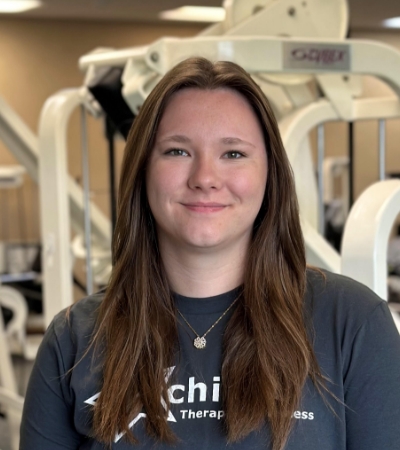
Rylee Gallagher
Fitness Coordinator/Certified Trainer


Kendra Emery
Fitness Instructor/Certified Trainer

Greg Paintner
PT, DPT